
Rosary Home Aged Care
About Our Care Home
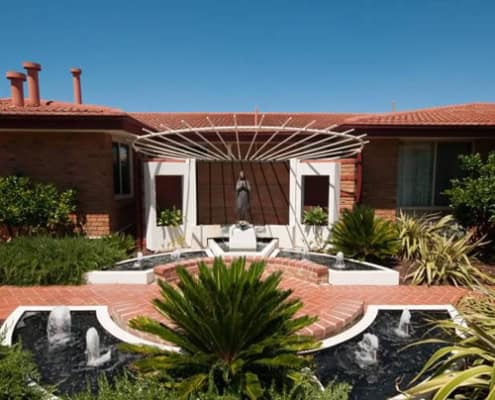
Rosary Home is an Aged Care Facility, run by the Dominican Sisters of Malta and well trained and qualified staff; under the Direction of a Board of Management – a highly dedicated group of Professionals, on voluntary basis.
Mission Statement
We committed Board members, sisters, staff and volunteers at Rosary Home, pursue our mission to provide continuous improvement, to deliver care with compassion and empathy, to our beloved residents and their loved ones.
United in an authentic team spirit, we seek to serve them in a holistic and professional way, to the best of our ability.
Always aiming to give them a better quality of life.
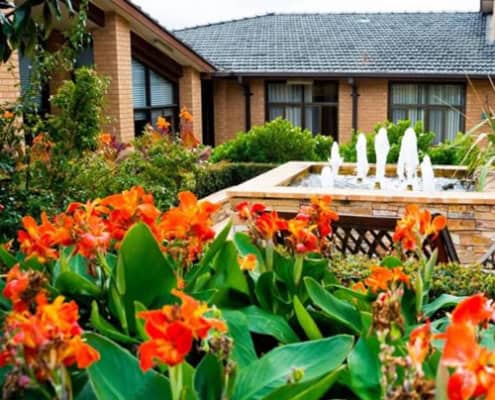
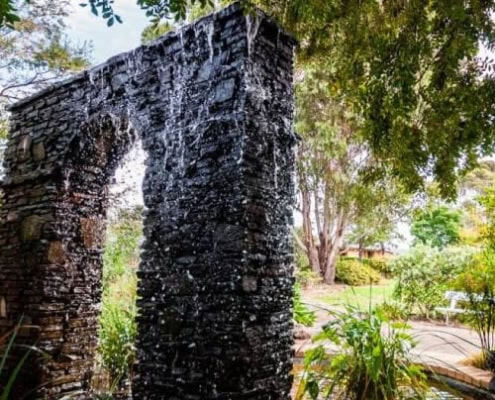
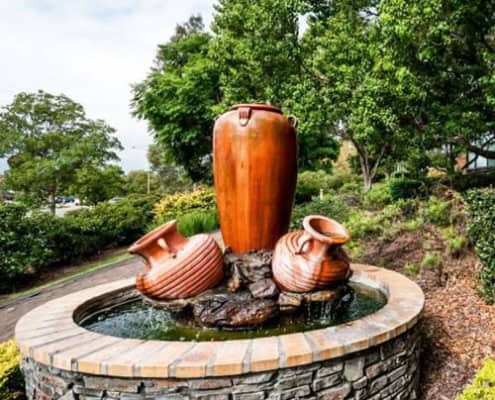
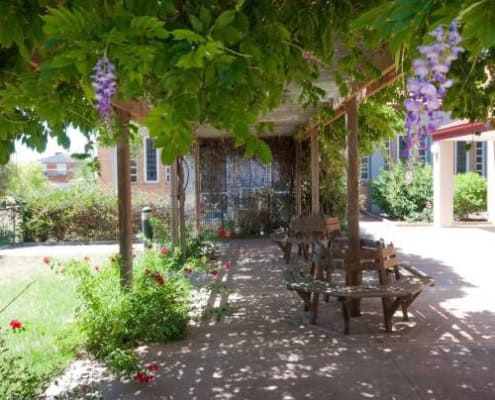
Dominican Sisters of Malta
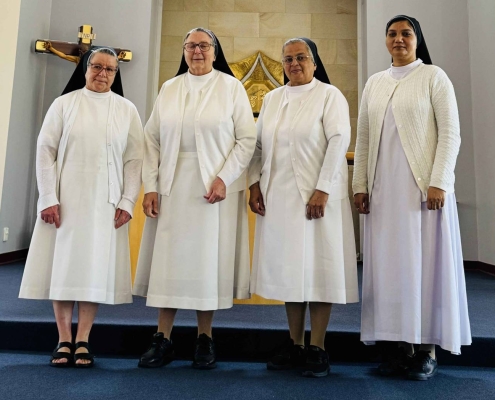
In accord with the words of St. Catherine of Siena “we have been sent to sow the word of God” the Dominican Sisters of Malta fully embrace the charism and spirituality of the Order of Preachers. Knowing well that the only word we can preach is the word that has found a home within us because we have welcomed it, pondered it, and contemplated it in the silence of our hearts, we seek to first enflesh the word in our lives by means of an intense and prayerful study of the Word of God.mission 2
Following the footsteps of our founder St. Dominic and the many saints of the Order, we strive to be authentic proclaimers of the word, to a world divided and hurting; to preach the Gospel of hope and mercy as Jesus did and thus sharing with others the fruits of our contemplation.
In accord with the Dominican tradition in spirituality, the members of our communities give themselves to the common life, times and places of silence, the recitation of the Divine Office in common and daily Mass.
Understanding Aged Care
Discussing aged care service options for an elderly relative and getting the process started can be a difficult and emotional task for many families.
Many of us avoid taking action and wait until there is an accident or a health crisis before we seek help, but it is a well-known fact that prevention is better than cure.
The signs that an elderly relative may need help can be as simple as struggling to carry the groceries home, or it can be a more significant problem such as frequent memory loss.
We all wish for our parents and grandparents to spend their golden years happily and continue to live fulfilling lives, so we’re here to help you find the right level of aged care and get started.
Aged Care Assessment
To help you determine what level of aged care services are required for your elderly relative, the first step is to contact myagedcare on 1800 200 422 and request a referral for an Aged Care Assessment Team (ACAT) Assessment.
The assessment will help you make an informed decision on what level of aged care service is appropriate for your parent or loved one. The assessment can be conducted either at a hospital or at home, depending on your relative’s situation.
During the assessment, the ACAT member(s) may ask the following questions about your relative
- Daily living activities and lifestyle.
- Activities they require help with.
- Overall health and well-being.
- Specific health conditions and medical history.
- If preferred, you can also give ACAT permission to contact your relative’s doctor to discuss their medical history.
- These are all factors that will help the ACAT determine the level of aged care services that is required.
Once the assessment is complete you will receive a copy of the document, ‘My Support Plan’, which will contain:
- A summary of the assessment.
- The types of services your aging relative is eligible to receive.
Rosary Home assesses individual needs and supports aging-in-place.
You should keep a copy of the ‘My Support Plan’ form and any approval letters for services your relative has been granted for. These documents will need to be presented if you decide to access any of the recommended services.
Finding the right Aged Care facility for your family member
We encourage you to make an appointment to view our aged care home in Melbourne, Victoria, speak to our Administrator and meet the staff to ask questions and discuss your relative’s care needs.
We recommend you look for the following things when considering an aged care home:
- A comfortable environment, surroundings suitable and acceptable by your relative.
- Australian Government Accreditation.
- A multi-disciplinary team of health professionals to ensure an appropriate level of care is available.
- What levels of aged care services are provided at the home, and whether on-going
- care can be accommodated within the home when your relatives care needs change?
- A menu that is healthy and varied.
- Rosary Home is a certified and accredited aged care provider in Melbourne, Victoria.
Within Rosary Home, residents are only moved if they require specific care (e.g. dementia)
Each resident is provided with a tailored care plan to identify their individual needs. This is reviewed frequently to ensure all residents are receiving the appropriate level of care.
Aged Care Admission
If you are interested in applying for aged care services at Rosary Home, please contact our Administrator, complete an application form, and make an appointment to discuss your relative’s admission.
Items you should bring to your appointment include:
- Completed Application Form
- My Support plan – document
- Assets and Income Assessment Statement (obtained from Centrelink)
- If applicable, a copy of Enduring Power of Attorney and Enduring Guardianship
- A detailed list of current medications your relative is currently taking
Other things to consider
- While in care, your relative can either remain with their current GP if they will visit the aged care facility, or choose one of the doctors who attend Rosary Home.

St Dominic
Saint Dominic (Spanish: Santo Domingo), also known as Dominic of Osma and Dominic of Caleruega, often called Dominic de Guzmán and Domingo Félix de Guzmán (August 8, 1170 – August 6, 1221), was a Castilian priest and founder of the Dominican Order. Dominic is the patron saint of astronomers.
 Dominic was born in Caleruega, halfway between Osma and Aranda de Duero in Old Castile, Spain. He was named after Saint Dominic of Silos, who is said to be the patron saint of hopeful mothers. The Benedictine abbey of Santo Domingo de Silos lies a few miles north of Caleruega.
Dominic was educated in the schools of Palencia (they became a university soon afterwards) where he devoted six years to the arts and four to theology. In 1191, when Spain was desolated by famine,[10] young Dominic gave away his money and sold his clothes, furniture and even precious manuscripts to feed the hungry. Dominic reportedly told his astonished fellow students, “Would you have me study off these dead skins, when men are dying of hunger?” In 1194, around age twenty-five, Dominic joined the Canons Regular in the canonry in the Cathedral of Osma, following the rule of Saint Augustine.
In 1215, Dominic established himself, with six followers, in a house given by Peter Seila, a rich resident of Toulouse. Dominic saw the need for a new type of organization to address the spiritual needs of the growing cities of the era, one that would combine dedication and systematic education, with more organizational flexibility than either monastic orders or the secular clergy. He subjected himself and his companions to the monastic rules of prayer and penance; and meanwhile bishop Foulques gave them written authority to preach throughout the territory of Toulouse.
In the same year, the year of the Fourth Lateran Council, Dominic and Foulques went to Rome to secure the approval of the Pope, Innocent III. Dominic returned to Rome a year later, and was finally granted written authority in December 1216 and January 1217 by the new pope, Honorius III for an order to be named “The Order of Preachers” (“Ordo Praedicatorum”, or “O.P.,” popularly known as the Dominican Order).
Dominic died at the age of fifty-one, according to Guiraud “exhausted with the austerities and labours of his career”. He had reached the convent of St Nicholas at Bologna, Italy, “weary and sick with a fever”. Guiraud states that Dominic “made the monks lay him on some sacking stretched upon the ground” and that “the brief time that remained to him was spent in exhorting his followers to have charity, to guard their humility, and to make their treasure out of poverty”. He died at noon on 6 August 1221. His body was moved to a simple sarcophagus in 1233. Under the authority of Pope Gregory IX, Dominic was canonized in 1234.
History of the Rosary
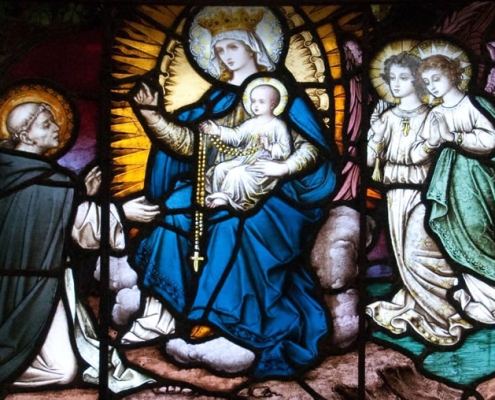
The spread of the Rosary, a Marian devotion, is attributed to the preaching of Saint Dominic. The Rosary has for centuries been at the heart of the Dominican Order. Pope Pius XI stated, “The Rosary of Mary is the principle and foundation on which the very Order of Saint Dominic rests for making perfect the life of its members and obtaining the salvation of others.” For centuries, Dominicans have been instrumental in spreading the rosary and emphasizing the Catholic belief in the power of the rosary.
The feast of Saint Dominic is celebrated with great pomp and devotion in Malta, in the old city of Birgu and the capital city Valletta. The Dominican order has very strong links with Malta and as a matter of fact, Pope St. Pius V, a Dominican friar himself, aided the Knights of St. John to build the city of Valletta.
We’re here to help you at any stage of your journey
Chat with us to:
- Better understand your care needs
- Have the costs explained
- Review our home’s features and benefits
- Book a tour and see for yourself
- Have all your questions answered.
Call 03 9367 7722
to get started
Our Commitment
To acknowledge & respect the dignity of each resident
& provide an excellent standard of comfort & health care.
& provide an excellent standard of comfort & health care.


